Event Report: The Digital Inclusion APPG’s Fourth State of the Nation Report Launch
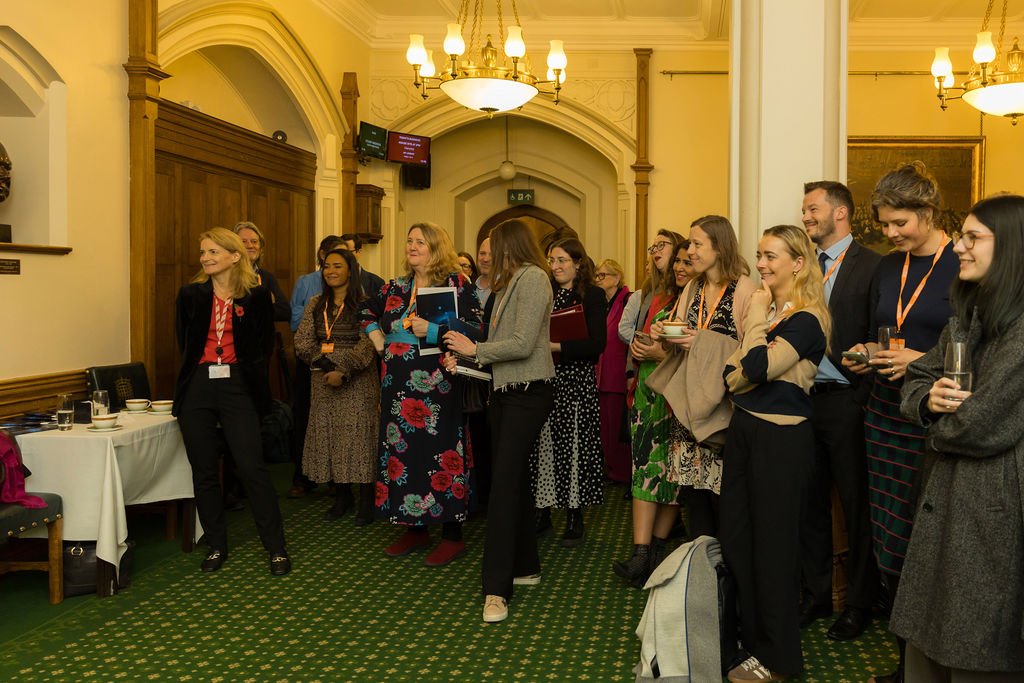
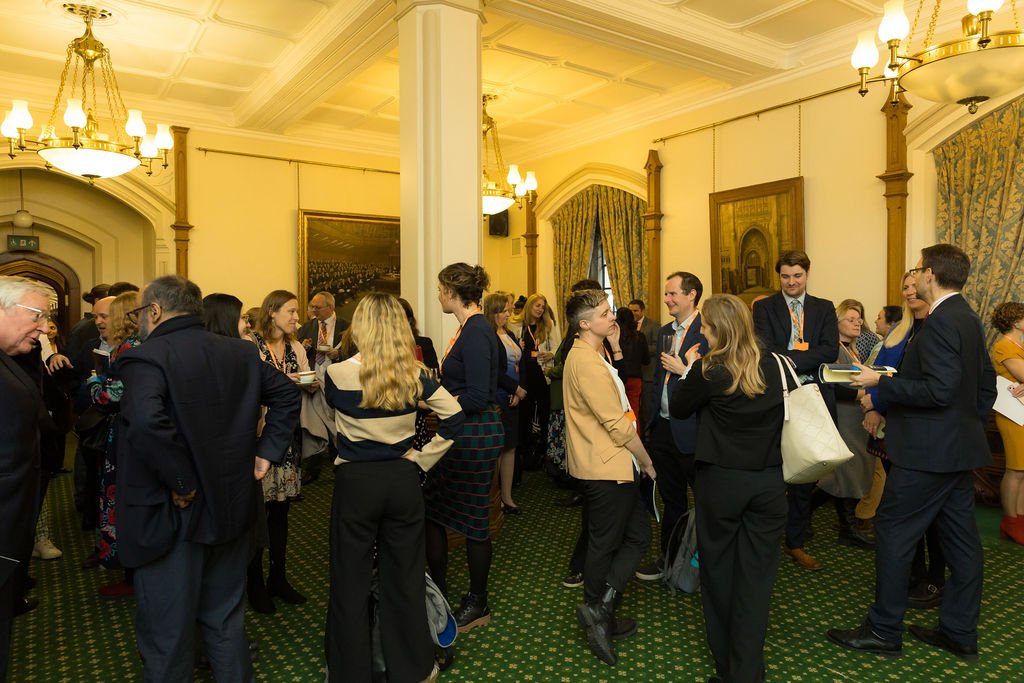
On Wednesday 12th November 2025, the Digital Inclusion APPG held a reception to celebrate the launch of the APPG’s State of the Nation Report 2025. The event was hosted and chaired by Chair of the Digital Inclusion APPG Dan Aldridge MP, with speakers including Minister for the Digital Economy Baroness Lloyd of Effra, Chair of the Digital Inclusion Action Committee Baroness Armstrong and Officer of the APPG Lord Clement-Jones.
The full report can be found here.
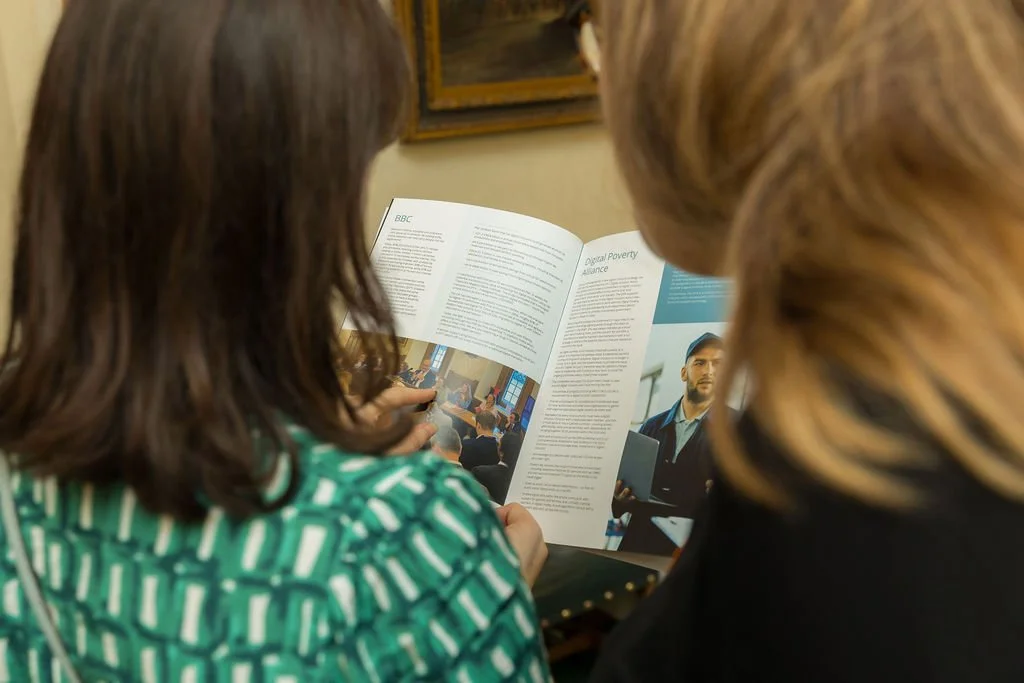
Please see below for the minutes of the report launch:
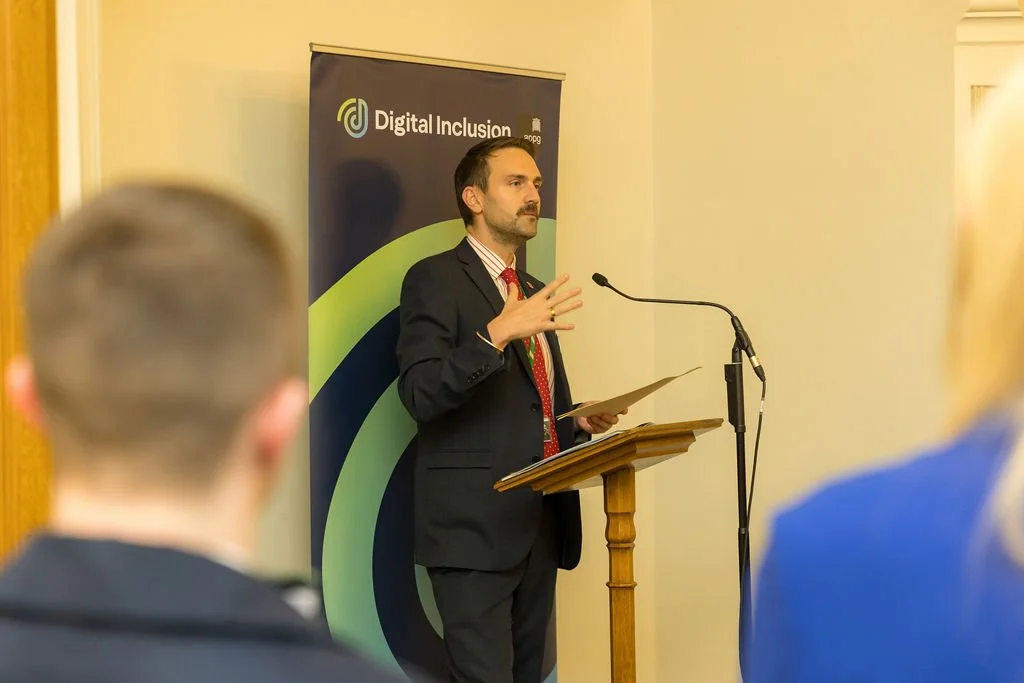
Dan Aldridge MP, Chair of the Digital Inclusion APPG
Dan Aldridge MP welcomed the guests and highlighted the growth of the APPG, showing his appreciation for the work that those present do to keep digital inclusion at the top of policymakers’ agendas. He welcomed the attendance of his parliamentary colleagues from both houses, extending a special thanks to Minister for the Digital Economy Baroness Lloyd and Chair of the Digital Inclusion Action Committee Baroness Armstrong.
Dan Aldridge MP highlighted that it has been a great year for digital inclusion, as the Digital Inclusion Action Plan published in 2025 represents a breakthrough in Parliament. He recalled how Chris Bryant MP trailed the first Digital Inclusion Action Plan in a decade at last year’s report launch and expressed his joy that a Labour Government has brought the plan into place. He expressed that he is looking forward to hearing more about the next phase of the action plan.
Looking back over the past year of the APPG, Dan recalled how the APPG went around the country, including to Manchester with Mayor Andy Burnham, highlighting the importance of local and regional authorities as critical drivers of change. He recalled the roundtables on ‘Skills and Will’ and ‘Data and Devices’, events that tapped into the knowledge of the groups and individuals making digital inclusion happen, including Good Things Foundation, Nominet, Jisc, Virgin Money, Virgin Media O2, VodafoneThree and BT. Dan brought attention to the expertise the guests have been able to share in the State of the Nation Report, which, he emphasised, sets robust and workable recommendations which the action plan can build on.
Dan underscored the pressing need to scale up the delivery of digital inclusion in the UK. He mentioned that collaboration between Secretary of State for Science, Innovation and Technology Liz Kendall MP and Secretary of State for Business and Trade Peter Kyle MP provides a good opportunity to engage with Government. He pushed Government to explore new funding models, which would unlock £30.8bn in savings.
To conclude, Dan extended his thanks his co-officers of the APPG Lord Clement-Jones and Baroness Verma, former co-chairs Leigh Ingham MP, Lucy Rigby MP, and Darren Jones MP – who is working to advance the digital agenda across No. 10 – as well as Baroness Lloyd and Baroness Armstrong. He also thanked all the APPG’s supporters, especially those that can’t be here as they are working to transform people’s lives across the country. He finished by recalling how, in his own constituency of Weston-Super-Mare, lots of people could not figure out the system to register to vote, demonstrating the need the urgent need for change.
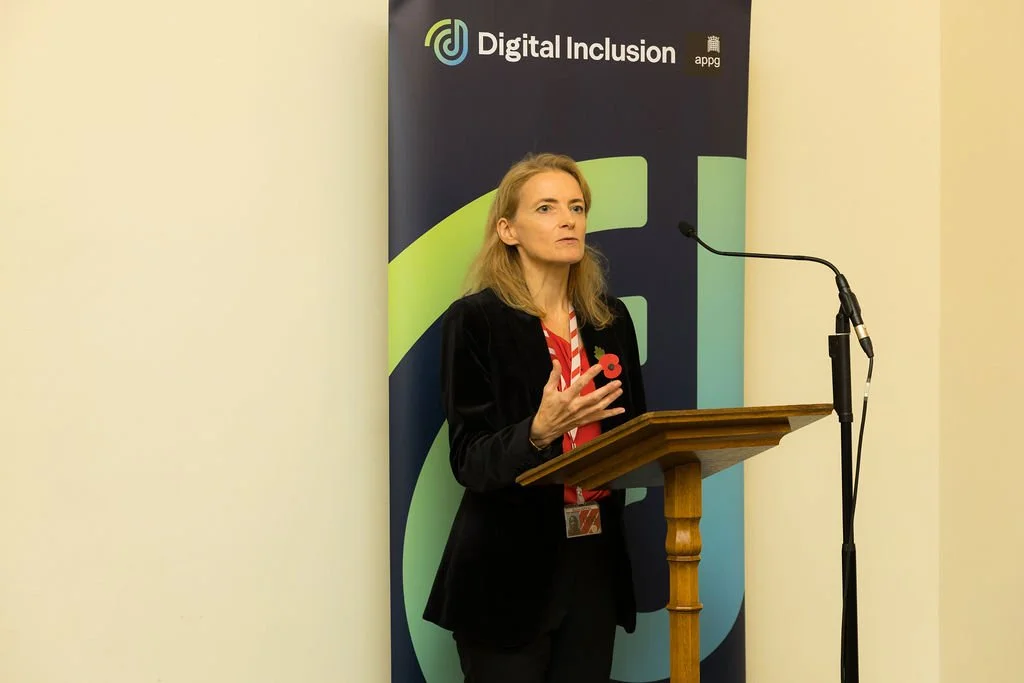
Baroness Lloyd of Effra, Minister for the Digital Economy
Baroness Lloyd opened by expressing her appreciation for the State of the Nation report, which she said contained lots of interesting angles and recommendations for her team to think about. She expressed her thanks to all the contributors. On the partnership between business, local initiatives and central Government, she said she understands that the needs of people that are digitally excluded can be bespoke and it takes the knowledge in attendance to meet those needs together with Government. She recalled her good fortune that she was able to go to Stratford with the Good Things Foundation and the local council to look at a local digital inclusion project, saying that it was very informative as it showed how often people have access to data, devices, and they have the will to be digitally included, but their fear overrides their will.
Baroness Lloyd stated that she appreciates the challenges of digital inclusion, but that she thinks there are also lots of solutions. She recalled how Chris Bryant MP spoke to the APPG in 2024 about the Digital Inclusion Action Plan, signed by five Secretaries of State, a cross-Government initiative which has a commitment and enthusiasm across Departments. She mentioned the NHS plan contains fundamental issues of access.
Baroness Lloyd went on to highlight areas of progress in the past year. She mentioned the Digital Inclusion Innovation Fund, for which the Department ran a call for evidence with 800 responses, demonstrating the enthusiasm and need for the fund. She looked back at how the Government established the Digital Inclusion Action Committee to provide ideas, support, and challenges to them, chaired by Baroness Armstrong, noting the Chair’s insatiable enthusiasm and interest for this cause. She also raised the establishment of the inter-ministerial group on digital inclusion, which brings ministers together to coordinate their approach. On other successes, she highlighted a pilot the Government have started with the Digital Poverty Alliance on device donation and expressed her thanks to all who have signed up to the IT Reuse for Good charter, including Good Things Foundation, Deloitte and VodafoneThree.
Baroness Lloyd spoke about the build infrastructure, extend device access and grow the human skills to give people the confidence and ability that can close the digital gap. To the industry partners who have made pledges in the action plan, many of whom were present, Baroness Lloyd thanked them for making the plan a reality. On skills, she pointed to the Prime Minister’s announcement on in June on the Government’s provision to build AI skills across the country by 2030, skills which connect people to areas of economic growth.
She ended by stating that the Government want to build on their progress and go further, to spread the Digital Inclusion Innovation Fund more widely across the country, targeting groups who are particularly digitally excluded. She highlighted her Department’s progress in getting digital infrastructure and connectivity in place, as through Project Gigabit, 89% of the country can access gigabit data and 96% can access 5G. She restated her aspiration for all towns and cities to be digitally inclusive, pointing to their public engagement survey, that will show the Government what digital exclusion means in practice and how people experience the problem. She concluded by thanking the APPG and guests, before handing over to Baroness Armstrong.
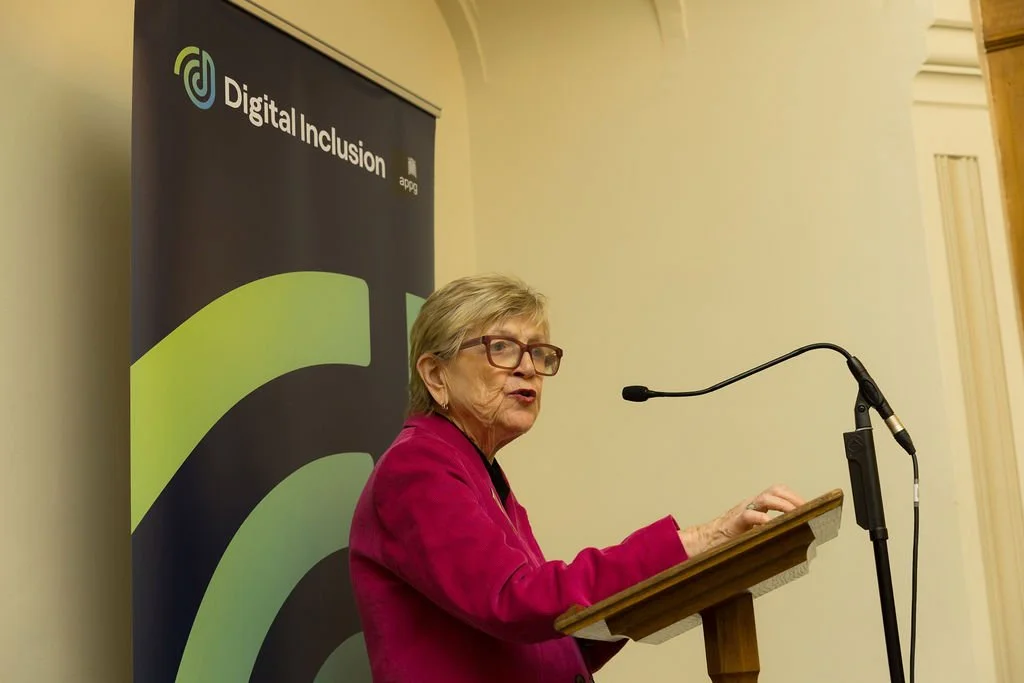
Baroness Armstrong, Chair of the Digital Inclusion Action Committee
Baroness Armstrong opened by saying that she does not come to the issue of digital inclusion with tech expertise, but she is committed to making sure everyone in the country gets the resources they need, as she does bring an understanding of people. She said that whatever the country does in terms of technical advancements and rapid change, it has to be about people, their opportunities, their confidence, their certainty that it is safe. She said that, as she goes around the country with the Independent Commission on Neighbourhoods, she has met some people who feel left behind and feel that nobody understands. Many people who have been digitally and socially excluded lack connections and have been separated from others, they aren’t able to ring people up and so many do not find out about jobs, training, or projects that would include them, because they are excluded from the online world.
Turning to the Digital Inclusion Action Committee, she said the committee is trying to be clear about the different groupings that are experiencing exclusion from the digital world and how it affects their lives phenomenally. She shared her findings that people working with those that are digitally excluded don’t recognise the whole effect, schools don't understand the problem and 80% of jobs are only advertised digitally, meaning young people without a laptop, device or Wi-Fi can’t get a job. She asked: if these people aren’t able to engage with the Government, then how does Government enable them to get connected?
Baroness Armstrong recalled how she has been around the country, going to places with digital exclusion hubs, and she has met people that are scared to get online, often scared of scams, who have been able to get engaged with a trusted volunteer who can give them access to the internet. She said examples like these bring about joy and change, and the Government need to tap into these experiences, use them and understand them. Baroness Armstrong emphasised her desire that there is an opportunity for all people to have a better life where they can get access, connections, and someone talk to.
Baroness Armstrong emphasised the need to include people that we don’t always think about, especially people with disabilities, highlighting her appreciation for the attendance of Lord Blunkett. She underlined the need to persuade Departments, local authorities and professionals that people with disabilities should be central to their thinking. Baroness Armstrong shared an anecdote from her husband who is engaged in the NHS’s provision of neighbourhood health but has not heard the issue of digital access raised in conjunction with the NHS’s community health project, demonstrating that there was not yet a recognition of the need to support and develop digital agency in patients, which would make care easier.
Baroness Armstrong finished by stating that we all have a job to do to progress the cause of digital inclusion, across industry, the voluntary sector, and every statutory level. She expressed her pleasure at working with all the organisations present and getting to see people access digital services for the first time. She shared a story about how she met a 90-year-old woman who, with the help of a digital inclusion project, was able to FaceTime her daughter in Australia and meet the granddaughter that she had never seen before. She thanked those present for the work they will do to move the agenda onwards. She closed by saying that we have got to ensure that people who have not got the access they need yet are afforded safe, secure access that they can feel confident in.
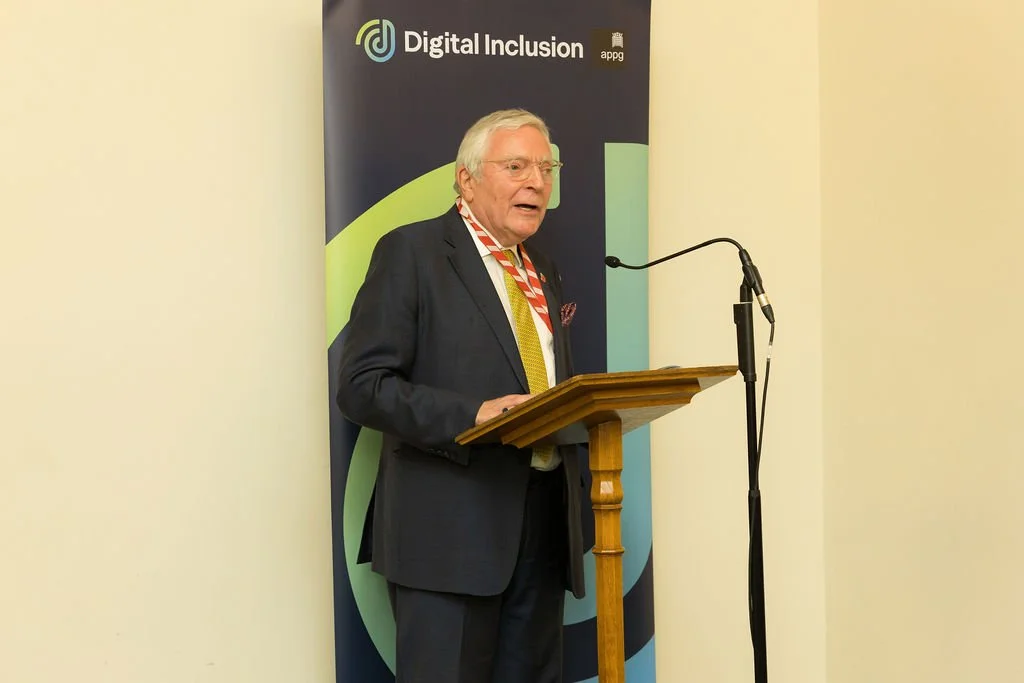
Lord Clement-Jones, Officer of the Digital Inclusion APPG and Liberal Democrats Lords Spokesperson for Technology
The final speaker, Lord Clement-Jones, thanked Minister Lloyd and Baroness Armstrong for their commitment and attendance. He shared that he was pleased when the Department for Science, Innovation and Technology announced the Digital Inclusion Action Plan, expressing gratitude to them for their progress. He highlighted that improvements to digital inclusion benefit the rates of employment, health, economic affairs and social connection. He contrasted the possibilities with a future without progress towards digital inclusion, a future with lower productivity, pressure on public services and inequality. He emphasised his anticipation to see the next steps of the action plan, saying that that digital inclusion cannot be an afterthought and nor can it exist in isolation. Lord Clement-Jones said that he is looking forward to seeing it championed across Government by Minister Lloyd, Baroness Armstrong and his parliamentary colleagues. He stressed that digital inclusion must be embedded across Government Departments, not hid in the Department for Science, Innovation and Technology.
Moving on to the APPG, Lord Clement-Jones expressed his gratitude to the APPG’s founder Darren Jones MP. He also pointed to the workable solutions implemented over the past year, including the Digital Inclusion Innovation Fund, and the work done by regional and local authorities. He stated that many, himself included, still have a digital inclusion wish-list, which for Lord Clement-Jones includes cutting VAT on internet tariffs and making internet access an essential utility.
Lord Clement-Jones wrapped up the speeches by expressing his thanks to all the third sector and industry organisations with whom he has worked closely on this issue, and echoed Dan's thanks to the Good Things Foundation. He went on pay homage to Helen Milner, CEO of Good Things Foundation, noting that she is stepping down and paying tribute to her for all her work in this area. He also thanked Nominet, Jisc, Virgin Money, Virgin Media O2, VodafoneThree and BT, the APPG’s parliamentary members, the APPG secretariat Lodestone Communications and to everyone who has contributed to the State of the Nation Report. He finished by highlighting how the large turnout demonstrates that there is a growing network of individuals committed to making digital poverty a thing of the past.